
Proxmox Virtualization
As a Proxmox partner and authorized reseller, Coral System Technologies Inc. helps teams plan, migrate, and operate Proxmox environments that bring virtual machines, containers, storage, networking, backup, and day-to-day control into one practical platform.
Delivered with Philippine infrastructure insight, Japanese enterprise expectations, and direct accountability from assessment through ongoing operation.

Platform overview
What is Proxmox Virtual Environment?
Proxmox Virtual Environment (Proxmox VE) is an open-source server management platform for running KVM virtual machines and LXC containers. It brings compute, storage, networking, clustering, backup and restore, and access control into one web-based management environment.
Proxmox VE can support a single node or a multi-node cluster. The platform provides the tools; production reliability still depends on workload sizing, quorum, storage, networking, backup, recovery, and clear operational ownership.
- Two virtualization models
- Use KVM for full virtual machines and LXC for Linux containers, selecting the model that fits each workload's operating system, isolation, and resource requirements.
- One management surface
- Manage virtual machines, containers, storage, networking, backups, permissions, and cluster activity through the integrated web interface.
- From one node to a cluster
- Begin with a single node or design a multi-node cluster with availability, migration, and recovery decisions matched to the workloads it will support.
The platform foundation
One environment for the infrastructure your teams depend on.
Coral turns those platform capabilities into an environment shaped around your actual workloads, continuity needs, controls, and operating responsibilities.
Virtual machines and containers
KVM virtual machines and LXC containers organized around workload requirements, isolation, resource use, and operational ownership.
Clustering and high availability
Cluster topology, quorum, failover behavior, and maintenance paths designed to keep critical services available through planned and unplanned events.
Storage, backup, and recovery
Storage integration, redundancy, backup schedules, retention, and tested recovery procedures aligned with business impact and recovery expectations.
Networking and security controls
Segmentation, access boundaries, firewall rules, certificates, and administrative controls built into a clear infrastructure operating model.
Centralized operations and insight
A unified management view for capacity, performance, updates, alerts, tasks, and the evidence teams need to operate with confidence.
Operational visibility
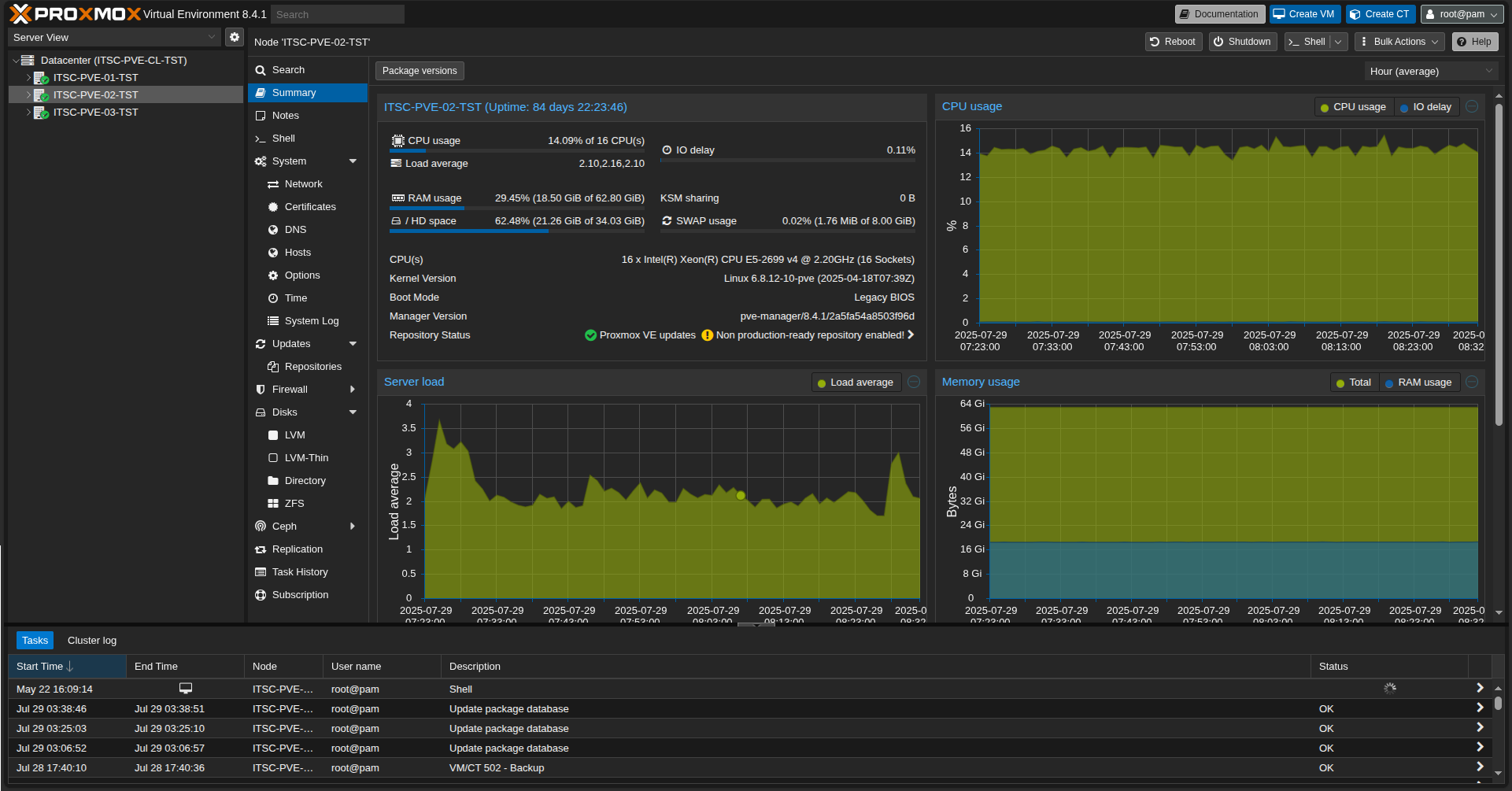
One view of the environment.
Capacity, performance, tasks, alerts, and infrastructure state remain visible to the people responsible for day-to-day operation.
Operational outcomes
Better infrastructure makes responsibility clearer.
Technology choices matter, but dependable operation comes from knowing how capacity, availability, access, recovery, and change will be managed after go-live.
Control without unnecessary sprawl
Consolidated management reduces fragmented tooling while keeping infrastructure decisions visible and accountable.
Availability is deliberate
Clustering, redundancy, maintenance, backup, and recovery are designed around service priorities rather than treated as defaults.
Operations stay observable
Performance, capacity, alerts, updates, and administrative activity remain accessible to the people responsible for the environment.
When Proxmox is a strong fit
Choose Proxmox when your infrastructure needs more control without avoidable licensing complexity.
The strongest cases combine a clear virtualization need with the discipline to plan availability, migration, security, backup, and ongoing ownership together.
- Existing virtualized workloads need a more cost-conscious, manageable platform.
- Critical applications require planned availability, backup, and tested recovery paths.
- Infrastructure teams need one view of compute, storage, networking, and operational activity.
- The environment must scale from a focused deployment to a resilient multi-node cluster.
We can begin with an infrastructure assessment to clarify fit, migration risk, architecture options, and the smallest responsible next step.